Key Points
- Sea Cloud teaches five connected Taoist arts because different practices meet different needs in modern life.
- Taoist Yoga, Qigong and Tai Chi help address the effects of desk work, screen time and staying in one posture too long.
- Breathing exercises and meditation give students practical ways to settle attention during study, exams and demanding work.
- Feng Shou Kung Fu develops coordinated strength, stamina and confidence without turning training into competition.
- The five arts are taught as one Lee Family method, creating a welcoming community at Sea Cloud Hall in Kirkstall.
The short answer is that no single practice does everything. Tai Chi, Qigong, Taoist Yoga, Feng Shou Kung Fu, and meditation and breathing exercises develop different qualities, but they support one another when practised together.
This is the Lee Family approach: not choosing between physical health, mental clarity and personal development, but allowing each part of practice to inform the others. At Sea Cloud’s Leeds classes, a student may learn to release tension through Taoist Yoga, settle the breath through Qigong, improve coordination through Tai Chi, develop strength through Feng Shou, and return to stillness through meditation.
The aim is not to master five unrelated subjects. It is to find a balanced way of moving through modern life.
Why are five arts better than one?
Many people first come to a class with one clear concern. A young professional may feel stiff after spending the day at a desk. A university student may be struggling to concentrate during revision. Someone else may simply want regular movement and a community that feels welcoming.
Those needs overlap, but they are not identical.
The Lee Family tradition recognises that the body needs mobility, the breath needs space, the mind needs periods of quiet, and the whole person benefits from useful physical challenge. One art may introduce a quality that another then develops more deeply.
This is why a Sea Cloud class might move between gentle exercises, flowing forms, breathing work, martial applications and stillness. The variety is not accidental. It reflects the Taoist principle of responding to what is needed rather than forcing one method onto every situation.
How can Taoist Yoga help with desk-job stiffness?
For many people, the main difficulty is not that they have failed to stretch intensely enough. It is that they remain in one posture for too long.
A laptop, phone or desk can gradually encourage the head to move forwards, the shoulders to round and the hips to stay folded. The body adapts to the shape it repeats. By the end of the working day, discomfort may feel as though it has appeared suddenly, although the pattern has been building through hours of limited movement.
Our article, Why Your Joints Ache by 3pm: How Taoist Arts in Leeds Can Undo a Day of Sitting, explores this pattern in more detail.
Taoist Yoga, or Lishi, offers a gentle way to change the pattern. Rather than forcing the body into extreme positions, it uses relaxed, continuous movements to explore the joints, spine, breath and posture.
The teaching principle is softness over force. You do not need to win a contest against your own hamstrings. You need to stop asking the same parts of the body to remain fixed all day.
Short, regular movement breaks can be more useful than one exhausting session followed by another long period of sitting. This is why Lishi practice can be valuable for young professionals who spend much of the day at a screen, as well as for students working in libraries or studying at home.
What does Qigong offer during study and work?
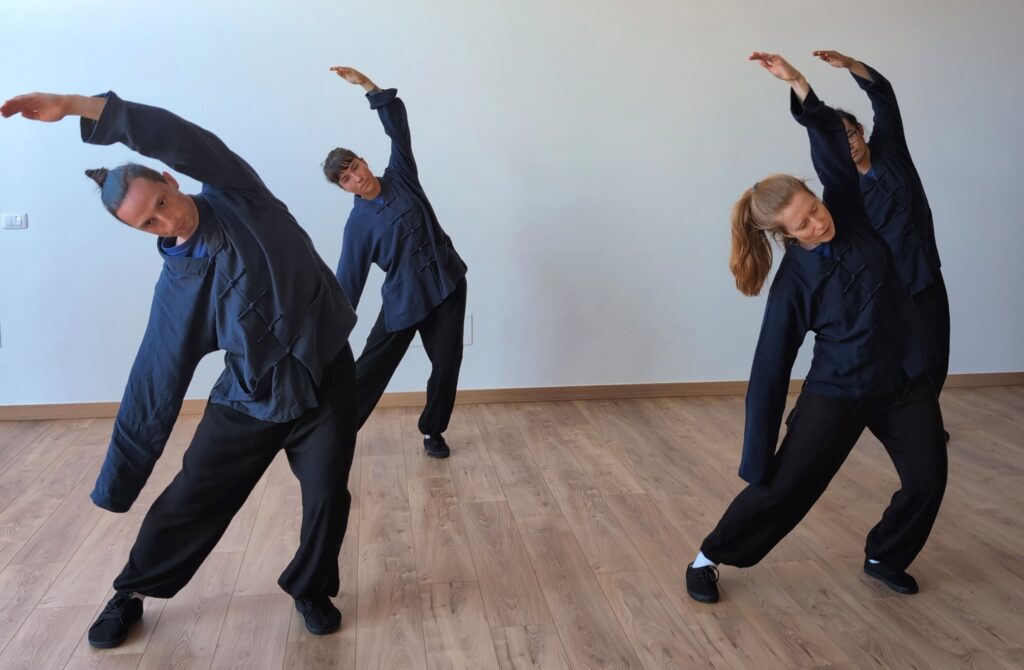
Qigong gives students simple movement and breathing exercises that can be repeated without needing a large space or specialist equipment.
University life often involves long periods of concentration followed by long periods of sitting. During revision, the mind may be busy while the body becomes almost completely still. It is common to keep reading, scrolling or working even after attention has become scattered.
Qigong brings attention back to the relationship between posture, breath and movement. A few minutes of slow, coordinated activity can provide a clear transition between studying and resting, or between one task and the next.
This is not a promise that Qigong will remove exam pressure. Nor is it a replacement for practical support when anxiety or low mood becomes difficult to manage. It is a learnable skill that many students use to create a little more steadiness in their day.
The Leeds University beginners’ course introduces breathing exercises, Taoist Yoga and Tai Chi in a progressive format. No previous movement experience is required, and exercises can be adapted according to the student.
Why is Tai Chi central to the method?
Tai Chi brings the principles of the other arts into continuous movement.
The slow form asks you to coordinate the feet, legs, spine, hands, eyes and breath while staying relaxed. It is physical, but it also requires attention. If the mind rushes ahead, the movement becomes disconnected. If the body uses unnecessary force, the sequence becomes heavy.
This makes Tai Chi particularly relevant to people who feel mentally overloaded or physically disconnected from their everyday movement. The practice offers a structured period in which attention has somewhere specific to go.
For a desk-based worker, Tai Chi can provide regular movement through several directions and levels. For a student, it can create a break from screens that is active without being competitive. For the wider public, it offers a practice that can be continued at different levels and stages of life.
You can read the Tai Chi classes in Leeds beginners guide before coming along. It explains what the classes involve, who they are for and what to expect from the four-week introduction.

How does Feng Shou Kung Fu add strength and confidence?
Feng Shou, or Hand of the Wind, is the martial art within the five-part method. It is sometimes described as soft Kung Fu because it develops sensitivity, timing and redirection rather than relying only on muscular force.
That does not make it passive. Students learn to coordinate the whole body, move with purpose and respond to changing situations. Training may include footwork, partner exercises, flowing combinations and more dynamic movement.
For young professionals, this can provide a different physical experience from sitting, typing and commuting. For students, it offers a practical way to develop focus and confidence with other people. For beginners of any age, it can be an enjoyable introduction to martial arts without the pressure of competition.
Feng Shou also helps explain why the Lee Family arts are not simply gentle exercise. Relaxation is not the same as weakness. In Taoist practice, softness allows the body to remain responsive, while strength develops through coordination rather than unnecessary tension.

Why include meditation and breathing exercises?
Movement alone does not always address the habit of constant mental stimulation.
Notifications, deadlines and crowded schedules can make it difficult to notice when attention has become fragmented. Meditation and breathing exercises provide a deliberate change of pace. They teach students to observe the breath, body and mind without needing to react to every thought.
The autumn season offers a useful example. In the White Dew autumn reset article, we link seasonal practice with breathing capacity and the Metal element. Traditionally, autumn is associated with refining, gathering inwards and preparing for winter. A simple breathing practice can help us become more aware of whether the breath feels restricted, hurried or comfortable.
This is a traditional Taoist framework, not a medical claim. Building breathing capacity in class means learning to use posture, relaxed movement and attention more effectively. It does not mean forcing large breaths or judging yourself when the mind wanders.
Meditation also makes the other four arts more meaningful. It gives Tai Chi a quiet centre, Qigong a direction, Taoist Yoga a quality of awareness and Kung Fu a sense of control.
What makes the five arts one method?
The five practices share several principles:
- Move regularly rather than remaining fixed.
- Use softness before force.
- Coordinate breath and movement.
- Develop awareness alongside physical ability.
- Practise consistently rather than chasing dramatic results.
In the Lee Family tradition, these are not separate fitness classes placed next to one another. They are different expressions of a common method.
A beginner may not notice all the connections immediately. In one class, Tai Chi may feel like a sequence to remember, Qigong may feel like a breathing exercise and Feng Shou may feel like a martial activity. Over time, the student begins to recognise shared qualities: relaxed structure, clear attention, connected movement and the ability to change without becoming tense.
Who are Sea Cloud’s Leeds classes for?
Sea Cloud Hall is in Kirkstall, a short distance from Headingley and Leeds city centre. The hall is accessible by bus from the city centre, Headingley and Hyde Park, with free parking nearby.
The atmosphere is welcoming and non-competitive. You do not need to arrive flexible, fit or experienced. Beginners are welcome, and movements can be adjusted so that you learn progressively rather than being expected to perform on your first visit.
The classes are particularly suited to:
- Young professionals looking for a healthier break from desk work and screens.
- University students who want movement, breathing practice and a sense of belonging alongside their studies.
- Leeds residents who want to improve general movement and take part in a supportive community.
Before attending, you may also find Your First Class at Sea Cloud Hall: What to Expect, What to Wear, and Why Nobody’s Watching You helpful.
What should you expect from the first class?
You will be guided step by step through a selection of practices. Some movements may be slow and quiet; others may be more active. You are not expected to know the forms in advance or keep up perfectly.
The most important first step is to notice how you move and breathe. If you have been sitting for several hours, your body may need gradual change rather than an intense stretch. If you have been studying or working under pressure, your attention may need time to settle.
The teacher’s role is to help you find an appropriate level of challenge. You can ask questions, take a break and work within your own range.
Why choose one class when you can learn the whole relationship?
Sea Cloud teaches five Taoist arts because modern life creates several connected problems: too much sitting, too much screen time, fragmented attention, physical inactivity and too little genuine community.
Taoist Yoga encourages opening and mobility. Qigong connects breath with movement. Tai Chi develops balance and continuity. Feng Shou builds coordinated strength and responsiveness. Meditation helps you become still enough to recognise what is happening.
Together, they offer a practical method for changing how you move through the day: not through force or perfection, but through gentle, consistent practice.
If you would like to experience the method for yourself, find out more about the next beginners’ course at Sea Cloud Hall in Leeds and take the natural next step: come to a class, meet the teachers and see how the five arts work together.
#TaoistArts #LeedsClasses #TaiChiLeeds #Qigong #SeaCloudHall
WordPress SEO Metadata
Meta Title: Why Five Taoist Arts? Sea Cloud Leeds Classes
Meta Description: The key points in this article are: 1. Why Sea Cloud teaches five connected Taoist arts. 2. How the practices support desk workers and students. 3. What beginners can expect at Sea Cloud Hall in Kirkstall.
Focus Keyword: Taoist arts Leeds classes
Suggested Permalink: why-five-taoist-arts-lee-family-method-sea-cloud-leeds-classes
Excerpt: The key points in this article are: 1. Sea Cloud teaches five connected Taoist arts because each develops a different quality. 2. Taoist Yoga, Qigong and Tai Chi support people affected by desk work and long periods of sitting. 3. Meditation and breathing exercises can help students create more space and clarity during study. 4. Feng Shou Kung Fu develops coordinated strength and confidence. 5. All five arts are taught in a welcoming, non-competitive community at Sea Cloud Hall in Kirkstall.
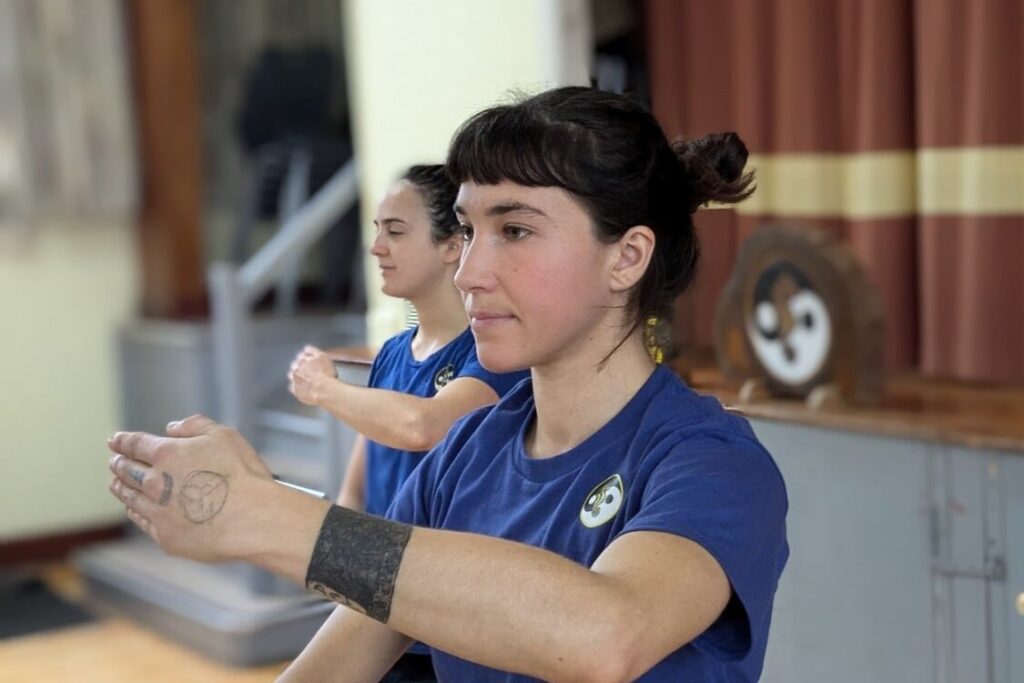
Featured Image Suggestion: Use an authentic landscape photograph of beginners practising Qigong together at Sea Cloud Hall, showing relaxed movement, natural interaction and the welcoming group atmosphere: https://sea-cloud.org/wp-content/uploads/2026/05/Ari-Qigong-Leeds-edited-1024×683.jpeg
Category: Leeds Classes
Schema Type: Article