
Key Points
- Tai Chi and Qigong may support better sleep, but the research suggests possible benefits rather than a guaranteed or dramatic effect.
- Studies have mainly involved older adults, so their findings cannot automatically be applied to Leeds students and young professionals.
- A short, gentle evening routine can help you shift out of work, revision and screen time without turning bedtime into another task to perfect.
- In the traditional Chinese seasonal calendar, late autumn moves towards winter: a useful prompt to make more room for rest and stillness.
- Persistent sleep problems deserve attention from a GP or other health professional; Tai Chi and Qigong are not substitutes for appropriate care.
Yes, Tai Chi and Qigong may help some people sleep better. Research, including randomised trials and reviews, suggests possible improvements in perceived sleep quality, particularly among older adults and people already experiencing sleep difficulties. The findings are promising but not conclusive, and the benefits should not be overstated.
This distinction matters if you are a student revising late, or a professional who finishes work only to keep scrolling. A gentle practice can offer a calmer transition into the evening, but it cannot guarantee sleep or resolve every cause of insomnia.
This week is a natural moment to review that transition: the UK clocks went back on Sunday 25 October 2026. In the traditional Chinese seasonal calendar, we are in late autumn, moving from Metal towards Water. Water is traditionally associated with stillness, rest and storing energy as winter approaches. This is a seasonal way of understanding practice, not a scientific explanation of sleep.
What does research say about Tai Chi, Qigong and sleep?
A 2014 review of five randomised trials found that Tai Chi was associated with better self-reported sleep quality in older people. The authors also cautioned that the studies had methodological weaknesses, so the results should be interpreted carefully.
A larger randomised trial involving adults aged 60 and over with chronic insomnia found modest improvements in some objective sleep measures after 12 weeks of Tai Chi compared with no intervention. Tai Chi was not significantly better than conventional exercise. The trial offers useful evidence, but it does not establish that the same results will apply to younger adults, or that Tai Chi treats insomnia for everyone.
Research on Qigong and sleep also suggests possible benefits, but studies vary in their methods, participants and practice styles. More research is needed to understand who may benefit and how much. Neither Tai Chi nor Qigong should be presented as a replacement for professional assessment or established insomnia treatment.
What the research does support is a measured possibility: regular, suitable movement and relaxation practice may help some people wind down and experience better sleep. In Sea Cloud teaching, we also see students use gentle movement and breathing to create a deliberate pause between the demands of the day and the rest of the evening. That is a teaching observation, not clinical proof.

Why might an evening wind-down help?
A desk-based day can leave you physically still but mentally busy. After hours of screens, deadlines or revision, it can be difficult to move straight from activity into bed and expect the mind to settle on command.
A short routine gives the evening a different shape. Rather than trying to force sleep, you make a little space for the body to move, breathing to soften and attention to turn away from the next notification or task.
The NHS advice on insomnia recommends relaxing for at least an hour before bed and avoiding devices right before going to sleep. A wind-down routine can sit alongside those practical steps; it does not need to be complicated or long.
How can you try a Taoist evening wind-down?
Use the last 30–60 minutes of your day to reduce stimulation, rather than squeezing in a demanding workout. The sequence below is a flexible starting point. Keep movements comfortable, and stop if anything causes pain, dizziness or distress.
1. Put the day down
Decide when you are finishing work or revision, and set your phone aside or switch it to a quiet mode. Dim the lights if you can, and choose a simple activity such as washing up, preparing clothes for tomorrow or reading away from a screen.
For students, this might mean writing down the next revision task before closing the notes. For professionals, it could be making a short list for tomorrow so that unfinished work is not repeatedly rehearsed in your head.
2. Move gently for five to ten minutes
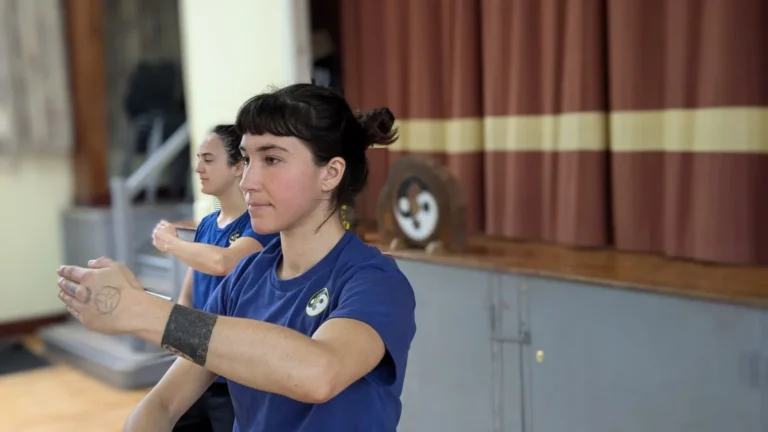
Stand with your feet comfortably apart. Let your shoulders soften, then make easy weight shifts from one foot to the other. You might add slow, relaxed arm movements, allowing your body to turn naturally without forcing a stretch.
The intention is not to tire yourself out or achieve a particular range of motion. It is simply to move after a day that may have involved sitting in one posture for too long. Our article on why joints ache after a day of sitting explains why regular changes of position matter more than deep stretching. If you want to explore the practice further, see our introductions to Qigong and Tai Chi.
3. Let the breathing become comfortable
Sit or stand somewhere you can relax. Notice the breath without changing it at first. If it feels comfortable, allow the out-breath to be a little longer than the in-breath, but do not force the air out, hold your breath or count rigidly.
If focusing on breathing makes you uncomfortable, return to its natural rhythm and simply feel your feet on the floor or the support of the chair. The aim is ease, not a breathing performance.
4. Sit or stand quietly for a few minutes
For three to five minutes, stay still in a position that feels comfortable. Notice sounds, sensations and thoughts as they arise, without needing to push them away or solve them. This is not about emptying your mind; it is practice in allowing attention to settle.
Sea Cloud’s meditation practice includes both seated stillness and meditation in movement. You can begin with a very short pause and gradually see whether it suits you.
5. Keep the transition simple
Afterwards, continue with a quiet, familiar activity and go to bed when you feel sleepy. If a full routine feels like too much, try just one part: a few minutes of gentle movement, or sitting quietly after you have put your phone away.

Does the late-autumn season change the practice?
In the Five Elements tradition, autumn is associated with Metal and winter with Water. As late autumn approaches winter, this provides a traditional prompt to move from outward activity towards more rest and conservation of energy.
This seasonal view is not a medical claim about the body or a guarantee that an evening routine will improve sleep. It is one way to reflect on the direction of change: daylight is shorter, evenings are darker, and many people may find it helpful to create a steadier transition into rest.
Our article on a Taoist autumn reset in Leeds explores the earlier Metal-season emphasis on breathing. Here, the emphasis is on making room for stillness as winter draws closer.
When should you practise, and what if it does not feel calming?
When is the best time to practise?
Try the routine during the last 30–60 minutes before bed, adjusting it to your schedule. Consistency can matter more than choosing an exact time. If practising immediately before bed feels too stimulating, move it earlier in the evening.
Can evening Tai Chi or Qigong be too energising?
It can be, depending on the person and the type of practice. Keep the movements slow, small and comfortable; avoid vigorous training close to bedtime. NHS advice recommends avoiding exercise within four hours of bed, so make an evening wind-down distinctly gentler than a workout.
What if my mind keeps racing?
That does not mean you have failed. You might write down what is on your mind, return attention to the feeling of your feet, or shorten the practice. If a breathing exercise makes you more alert or uneasy, leave it out and choose a quiet activity instead.
Do I need equipment or experience?
No. You need only enough space to move gently or sit comfortably. There is no need to be flexible, learn a sequence or buy equipment before trying a few simple movements.
What should you remember about sleep and Taoist practice?
Tai Chi and Qigong may support sleep for some people, but the evidence is limited and does not promise a cure. The research has largely focused on older adults, so it is especially important not to assume the same effects for students and young professionals.
A modest routine is a reasonable place to begin: reduce screen stimulation, move gently, breathe without force and give yourself a few quiet minutes. If sleep problems persist for months, affect your daily life or are difficult to manage, speak with a GP or another health professional. The NHS guidance on insomnia explains when to seek help and what support may be available.
If you would like to try these practices with guidance, Sea Cloud Hall welcomes beginners at Sandford Place, Kirkstall, Leeds LS5 3AG, near Headingley and the city centre. You can read what to expect at your first class or explore the Leeds Tai Chi and Taoist Arts classes.
References
- NHS, Insomnia: self-help advice and when to see a GP.
- Irwin et al., “Tai Chi exercise for self-rated sleep quality in older people: a systematic review and meta-analysis”, 2014.
- Irwin et al., “Effects of Tai Chi or Exercise on Sleep in Older Adults With Insomnia: A Randomized Clinical Trial”, 2021.
- Sea Cloud teaching experience: practical suggestions reflect the Lee Family Arts emphasis on relaxed movement, breathing, consistency and adapting practice to the individual. This is not clinical evidence or medical advice.
