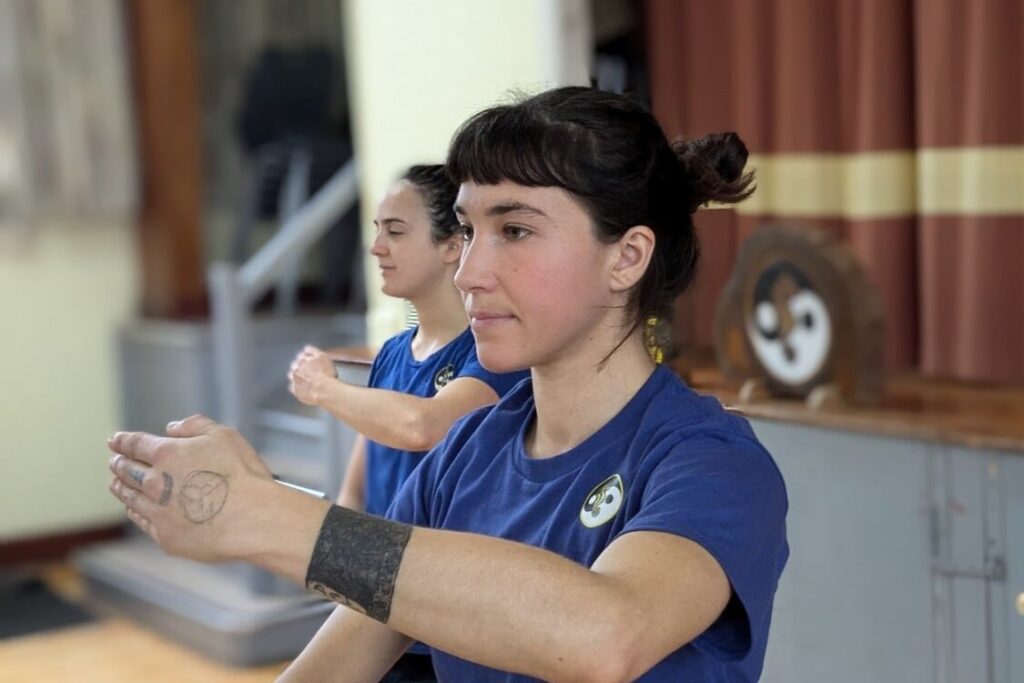
Key Points
- Qi is a traditional Taoist way of understanding vitality, movement, breath and the relationship between body and mind.
- Beginners may notice warmth, tingling, heaviness, slower breathing or a greater sense of connection, but these sensations are not required.
- Feeling nothing during your first weeks is completely normal and does not mean that your practice is failing.
- The Lee Family method does not ask you to force, generate or imagine Qi. It emphasises relaxed movement, natural breathing and steady attention.
- The clearest signs of progress are often practical: less unnecessary tension, better balance, easier movement and a calmer response to daily pressure.
So, what does Qi actually feel like?
The honest answer is that Qi does not feel exactly the same for everyone.
In traditional Taoist practice, Qi is a way of describing life energy, vitality and the functional activity of the body. It is connected with breathing, movement, awareness and the changing relationship between physical and mental states. Qigong is often translated as “cultivating Qi” or “developing skill through practice”.
This is a traditional framework rather than a claim that the body contains a mysterious substance that can be switched on like electricity. Modern science does not currently demonstrate a separate, measurable Qi force or energy field. However, the sensations people notice during Tai Chi and Qigong are real experiences, and may involve changes in breathing, circulation, muscular tension, attention and nervous-system activity.
At Sea Cloud, we use the traditional language of Qi while remaining practical. You do not need to adopt a particular belief before beginning. You can simply pay attention to how you move, breathe and respond.
What might you notice during Tai Chi or Qigong?
Some people experience warmth in their hands, feet or whole body. This can happen as the body relaxes, muscles become less tense and circulation changes.
Others notice tingling, pulsing, pressure or a gentle sense of fullness. These sensations may be more noticeable when you stand quietly or move slowly, because your attention is no longer occupied by speed, effort or external distractions.

You may also feel heaviness. This is sometimes described as feeling rooted, grounded or more aware of your weight through your feet. It should not feel like forcing yourself into the floor. Instead, the body may simply become easier to sense.
Some students report the opposite: a feeling of lightness, spaciousness or freedom in the shoulders and chest. The sensations can vary from one session to the next, depending on sleep, stress, temperature, concentration and how much effort you are using.
A further common experience is that the body begins to feel more connected. Rather than moving only from the shoulders, arms or legs, you may start to sense movement travelling through the whole body. This is particularly relevant for people who spend much of the day sitting at a desk, commuting or looking at screens.
Does Qi have to feel dramatic?
No. In fact, chasing dramatic sensations can make practice less useful.
A beginner may expect Qi to feel like a wave of heat, an electrical current or a powerful force moving through the body. Sometimes people do experience strong sensations, but intensity is not the same as progress.
The Lee Family approach places more emphasis on relaxed, continuous movement. You are not asked to tense the body, hold the breath or mentally push energy from one place to another. The aim is to reduce unnecessary effort so that movement becomes more natural and coordinated.
This matters for anyone arriving at a first class in Leeds worried that they will “do it wrong”. Tai Chi and Qigong are not tests of flexibility, athletic ability or belief. They are ways of learning to notice and organise your existing movement and attention.
What if I feel nothing?
Feeling nothing unusual during your first few weeks is normal.
Many beginners are so busy remembering the sequence, following instructions or wondering whether they are feeling Qi that they do not notice subtle changes. Others are accustomed to looking for obvious signs of effort, such as sweating, muscular fatigue or stretching intensity.
The first signs of progress may be much quieter. You might realise that your jaw is less clenched, your shoulders are not lifting towards your ears or your breathing has become slower without being forced.
You may also notice that standing feels more balanced, turning is easier or you recover from a stressful day more quickly. Some students find that sleep becomes easier or that ordinary stiffness is less prominent. These are personal observations, not guaranteed medical outcomes, but they are often more useful than waiting for a special sensation in the hands.
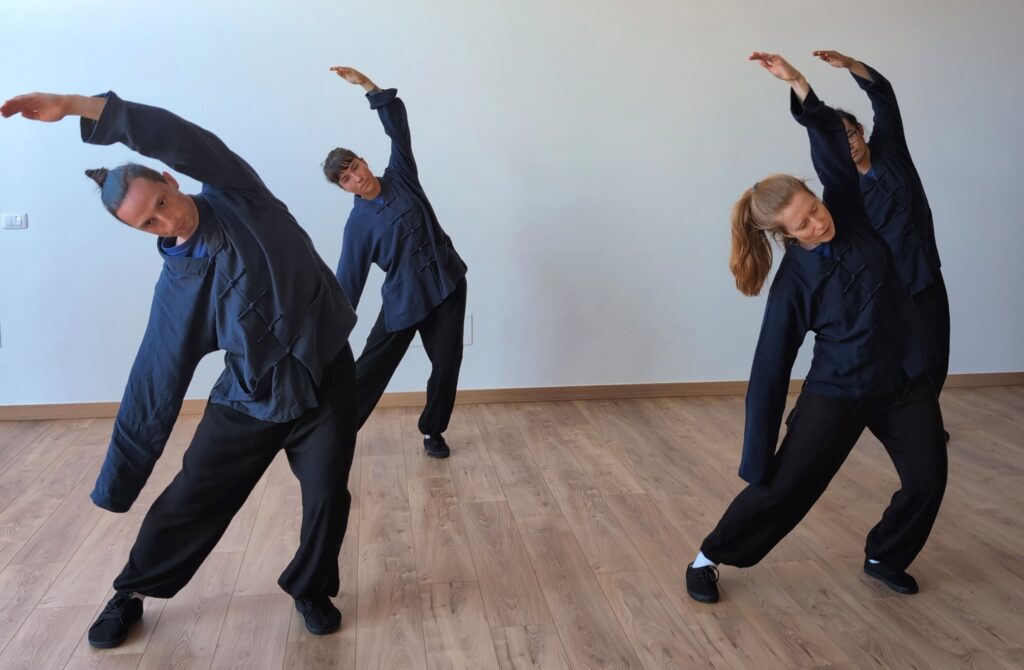
A useful question after practice is not, “Did I feel Qi?” Try asking:
- Do I feel more settled than when I arrived?
- Is my breathing less hurried?
- Can I sense my feet and posture more clearly?
- Did I use less effort than I expected?
- Is there any small change in how I move or respond?
Progress is often measured in patterns across several weeks, not in a single memorable class.
How does the Lee Family method approach Qi?
The Lee Family Taoist Arts combine Tai Chi, Qigong, Taoist Yoga, meditation and Kung Fu within one connected system. Each art offers a different way to develop movement, awareness and vitality.
In the Lee Family approach, Qi is not something you must manufacture through willpower. Practice begins with the conditions that allow the body to work more naturally:
- release unnecessary tension;
- keep movement continuous rather than abrupt;
- breathe without forcing the breath;
- coordinate the whole body;
- pay attention without becoming rigid or self-conscious.
This is why relaxation does not mean collapsing or becoming passive. It means learning to use the right amount of effort. A relaxed movement can still be strong, stable and precise.
The Lee Family Taoist Arts page explains how Tai Chi, Taoist Yoga, Qigong, meditation and Kung Fu complement one another. In a class, you may move between quiet standing, flowing sequences, breathing exercises and more dynamic work. This variety helps you explore Qi through different qualities of movement rather than trying to produce one particular feeling.
What does scientific evidence say about Qi sensations?
Scientific research can investigate the effects of practices such as Tai Chi and Qigong, but it cannot confirm every traditional explanation attached to them.
Studies of mind–body practices have associated regular practice with changes in relaxation, balance, mood, sleep and perceived stress, although the quality and strength of evidence varies between outcomes. Warmth and tingling can also be understood through familiar physiological processes, including changes in blood flow, muscle tension and attention to bodily sensations.
A review of Qigong research discusses reported experiences and possible physiological mechanisms, while also showing why traditional ideas of Qi should not simply be presented as established biomedical facts. You can read the peer-reviewed review on Qigong and related mind–body practice for further context.
At Sea Cloud, we distinguish between three forms of understanding:
- Traditional Taoist understanding: Qi describes vitality, movement, breath and balance.
- Teaching experience: students often report warmth, calmness, connection, improved balance or less stiffness over time.
- Scientific evidence: research can examine movement, breathing, stress, balance and other measurable outcomes, but has not established a separate Qi force.
You can take part without pretending these categories are identical.
How can you tell whether your practice is working?
Look for greater ease rather than stronger sensations.
If you work at a desk, notice whether you can interrupt the familiar pattern of rounded shoulders, a tight jaw and shallow breathing. If you are a student, notice whether you can move from lecture or revision into a more settled state without needing to push yourself through an intense workout.
Regular practice may also show up in the way you walk, stand, turn and carry objects. Movement may become less fragmented. You may catch tension earlier and release it before it becomes uncomfortable.
This is the same principle behind practical guides such as “Why Your Joints Ache by 3pm: How Taoist Arts in Leeds Can Undo a Day of Sitting” and “Your Walk to Uni Is Already Qigong, Here’s How to Practise It Properly”: gentle movement repeated throughout the day is often more helpful than waiting for one demanding session to correct hours of stillness.
Seasonal practice can offer another perspective. “White Dew in Leeds: A Taoist Autumn Reset for Stress, Stiffness and Study” connects autumn practice with breathing and the traditional Metal element, encouraging people to build breathing capacity gradually before winter.
Can beginners learn Qi in Leeds?
Yes. You do not need previous experience, special flexibility or a particular spiritual background.
Sea Cloud Hall is at Sandford Place, Kirkstall, Leeds LS5 3AG, a few minutes from Headingley and Leeds city centre. The venue is accessible by bus, with free parking nearby, and classes have a welcoming, non-competitive atmosphere.
Beginners’ courses start each month. The Tai Chi classes in Leeds beginners page explains what to expect from the four-week course, including Tai Chi, Qigong, Taoist Yoga and Hand of the Wind Kung Fu. Students from the University of Leeds and Leeds Beckett, as well as local professionals and residents, are welcome.
For students who are based on campus, Sea Cloud also offers a Leeds University Tai Chi, Qigong, Taoist Yoga and Kung Fu course.
What should you do in your first class?
Do not try to force yourself to feel Qi.
Wear comfortable clothing, follow the teacher’s instructions and allow your breathing to remain natural. If a movement feels too demanding, reduce the range or pause. If you feel pain, dizziness or anything concerning, stop and speak to the teacher.
Your first useful experience may be very ordinary: noticing your feet, breathing more freely or leaving with less tension than you had when you arrived.
References
- Sea Cloud, Qigong
- Sea Cloud, Lee Family Taoist Arts
- Sea Cloud, Tai Chi classes in Leeds for beginners
- National Library of Medicine, review of Qigong research
A practical way to begin
Qi may feel like warmth, tingling, heaviness, lightness, steadier breathing or a stronger sense of connection. It may also feel like nothing remarkable at all. Neither experience proves or disproves your progress.
The most reliable approach is to practise consistently, remain relaxed and observe how your movement, breathing and response to everyday stress change over time.
If you would like to explore this for yourself, come along to a beginners’ class at Sea Cloud Hall in Kirkstall. You can find the current Leeds class details or contact Sea Cloud with any questions.
#TaiChi #Qigong #TaoistArts #LeedsClasses #MindfulMovement
WordPress SEO Metadata
- Meta Title: What Does Qi Feel Like? A Beginner’s Guide | Sea Cloud Leeds
- Meta Description: The key points in this article are: 1. Qi is a traditional Taoist understanding of vitality. 2. Warmth, tingling and heaviness are common but not required. 3. Feeling nothing is normal. 4. Relaxed movement and natural breathing matter more than forcing energy. 5. Beginners can explore Qi at Sea Cloud Hall in Leeds.
- Focus Keyword: what does Qi feel like
- Suggested Permalink:
/what-does-qi-feel-like-taoist-practice-leeds/ - Excerpt: The key points in this article are: 1. Qi may be experienced as warmth, tingling, heaviness, lightness or greater body awareness. 2. Feeling nothing during your first weeks is normal. 3. The Lee Family method emphasises relaxed movement, natural breathing and attention rather than forcing energy. 4. Scientific evidence can explain some sensations without dismissing their personal meaning. 5. Beginners can explore Tai Chi and Qigong at Sea Cloud Hall in Kirkstall, Leeds.
- Featured Image Suggestion: Beginners practising Qigong together at Sea Cloud Hall in Leeds
- Category: Leeds Classes
- Content Silo: Holistic Health, Practical Holistic Health
- Schema Type: Article