
Key Points
- You do not need to be flexible to begin Tai Chi; stiffness is often a useful starting point.
- For many desk workers and students, discomfort comes less from one “bad” posture than from staying in the same posture for too long.
- The Lee Family approach develops mobility through gentle, consistent movement rather than forceful stretching.
- Tai Chi, Qigong, Taoist Yoga, Feng Shou Kung Fu, meditation and breathing exercises support different aspects of physical and mental balance.
- Sea Cloud Hall in Kirkstall offers welcoming, non-competitive classes for beginners and people of all ages and experience levels.
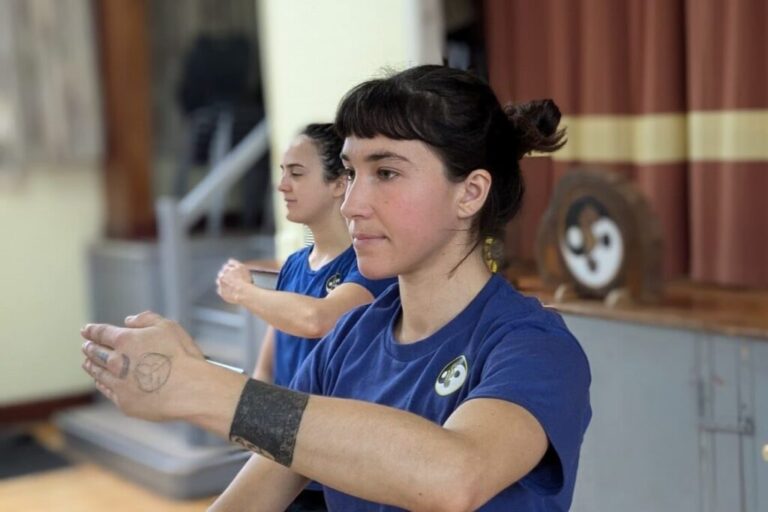
If you feel stiff, sore or not connected to your body, you are not too stiff for Tai Chi. In fact, limited flexibility is one of the reasons many people begin. Tai Chi does not require you to touch your toes, hold deep stretches or arrive with a particular level of fitness.
The Lee Family approach begins with comfortable movement, natural breathing and awareness. Rather than forcing the body into larger shapes, you learn to move regularly, release unnecessary tension and gradually become more at ease in your own structure.
For many people working at a desk or studying for long hours, the main problem is not simply sitting. It is remaining in the same posture for too long. A neck held forward over a laptop, shoulders fixed around a phone or hips folded in a chair may feel manageable at first, but the body can become uncomfortable when it has no opportunity to change position.
This is why flexibility is not only about stretching. It is also about restoring movement throughout the day.
Why does desk work make the body feel stiff?
The body is designed to move between many positions. When work, study or commuting keeps you in one arrangement for hours, some areas remain contracted while others do very little. The result can be a feeling of tightness around the neck, shoulders, hips, lower back and wrists.
The issue is often described as “poor posture”, but posture is not a fixed shape that must be held perfectly. Even a well-aligned posture can become uncomfortable if you stay in it without moving. A more useful question is: how often does your body get to change, breathe and reorganise?
Our desk posture article explores this in more detail. Its central message is simple: regular changes of position are usually more helpful than trying to hold yourself rigidly upright all day.
A short movement break might involve standing up, walking to refill your water, circling the shoulders or gently shifting your weight. These small actions are not a replacement for medical care, but they can interrupt the pattern that allows stiffness to build.
How does Tai Chi develop suppleness without forcing it?
Tai Chi uses slow, continuous movements that take the joints through comfortable ranges. The arms, spine, hips and legs coordinate through weight changes, circling and extending, while the muscles get build strength gently over time.
This is different from focusing only flexibility as a competition. There is no prize for reaching the deepest position or copying the largest movement in the room. The work is in the quiescence: feeling where you are reaching your limit, noticing when your shoulders lift and allowing movements to become smoother.
Harvard Health describes Tai Chi as low-impact and adaptable, with movements that are generally circular rather than forced. It also notes that the joints are not fully locked or extended during the practice. You can read its overview of the health benefits of Tai Chi for a summary of the wider evidence.
In our teaching experience, students who stop chasing flexibility often begin to move more freely. When the body no longer expects a stretch to hurt, it can participate with greater confidence.

What role does Taoist Yoga play?
Lee Family Taoist Yoga, sometimes called Open Door Yoga, gives students a more direct way to explore posture, mobility and relaxation. It includes a range of stances, positions and movement sequences, but the emphasis is not on pushing the body to its limit.
The practice teaches you to listen. You may work with a smaller range, change the height of a stance or take a pause when needed. Over time, this can help you understand the difference between useful effort and unnecessary strain.
This approach matters for people who have spent years being told to “stretch more”. If the body is already tired, stressed or protective, intense stretching may create more tension rather than less. Gentle repetition gives the nervous system time to become familiar with movement again.
The Lee Family Taoist Arts bring Tai Chi, Taoist Yoga, Qigong, meditation and Kung Fu into one connected system. Each practice has a different emphasis, but all can contribute to better awareness of how you stand, breathe and move.
How can Qigong and breathing exercises help?
Qigong uses simple movements, standing practices, breathing and focused attention. Because the exercises are often shorter and less complex than a Tai Chi form, they can be a practical way to reconnect with the body during a demanding day.
For a student moving between lectures, library sessions and revision, a few minutes of Qigong can provide a clear transition between activities. For a professional, it can offer a way to step away from a screen without needing to change into gym clothes or complete an intense workout.
Breathing should remain natural. You do not need to force a deep breath or hold it for a particular length of time. Instead, notice whether the breath becomes shallow when you concentrate, worry or brace your shoulders, and allow it to settle as the body moves.
The Taoist understanding is that movement, breath and attention influence one another. Scientifically, we should be more measured: breathing and mindful movement may support relaxation and body awareness, but they are not a cure for every form of stress, pain or illness.

Is Feng Shou Kung Fu suitable if I am not very fit?
Feng Shou, the Taoist Hand of the Wind Kung Fu, is the more dynamic side of the Lee Family training system. It develops coordination, footwork, partner awareness and confidence, but it is not taught as aggressive or competitive training.
For someone who feels stiff, this can offer a different kind of movement challenge. Tai Chi and Taoist Yoga may help you notice alignment and relaxation, while Feng Shou introduces responsive movement, changing direction and using the whole body with greater connection.
You do not have to begin with advanced techniques. Beginners are guided progressively, and movement can be adjusted to suit different levels of experience. The aim is not to prove that you are powerful, fast or flexible, but to learn how to use your body more intelligently.

What can you do during a working or study day?
A helpful starting point is to stop waiting until you feel uncomfortable. Use natural interruptions in your day as opportunities to move before your body becomes locked into one position.
Try this simple sequence:
- Stand up and let your arms hang naturally.
- Shift your weight gently from one foot to the other.
- Turn your head slowly, without pulling it towards an extreme position.
- Circle or roll the shoulders with relaxed breathing.
- Walk for a minute before returning to your desk.
- Notice whether your jaw, hands or stomach are gripping.
Keep the movements easy. The purpose is to change your relationship with stillness, not to complete a demanding stretching routine beside your desk.
At home, you could spend five minutes practising a simple Qigong exercise, a few Taoist Yoga movements or a quiet standing posture. Consistency is more valuable than a large session that leaves you sore and is difficult to repeat.
Meditation can also be practised without sitting perfectly still for a long period. Moving meditation asks you to keep returning attention to the feet, hands, breath and changing sensations of the body. This can be especially useful when your mind is busy with deadlines or unresolved tasks.
What does Taoist philosophy teach about flexibility?
Taoist philosophy does not treat health as a battle against the body. The principle of working with conditions rather than constantly opposing them is reflected in the way we teach.
If a joint is restricted today, you begin with what is available. If concentration is poor, you return to a simple movement. If energy is low, you practise gently rather than turning the session into another test of willpower.
This does not mean avoiding effort. It means learning to recognise the right amount of effort. A practice that can be repeated tomorrow is often more useful than one that produces a dramatic result today.
The Lee Family tradition also places importance on lifelong learning. Flexibility is not a finish line. It is an ongoing ability to adapt, change position and remain present as circumstances change.
Can I join a Tai Chi class if I have pain or limited mobility?
Many people with ordinary stiffness can begin with small, comfortable movements. However, Tai Chi is not a diagnosis or a substitute for treatment, and no responsible instructor can promise that it will resolve a specific medical condition.
If you have significant, persistent or worsening pain, recent surgery, an injury, dizziness or a diagnosed condition affecting movement, speak with your GP or physiotherapist before starting. Tell the teacher about any relevant limitations so the practice can be adapted appropriately.
At Sea Cloud Hall, beginners are guided step by step. You do not need previous experience, high fitness or existing flexibility, and you are encouraged to work at your own pace.
What are classes like at Sea Cloud Hall in Kirkstall?
Sea Cloud Hall is in Kirkstall, a few minutes from Headingley and Leeds city centre. The venue is accessible by public transport, with free parking nearby, making it practical for students, local residents and professionals travelling from across Leeds.
Classes are non-competitive and welcoming. New and progressing students learn together, with teachers and experienced students helping beginners settle into the atmosphere. You can read more about Tai Chi classes in Leeds, including the four-week beginners course.
If you are unsure what to expect, our guide to your first Tai Chi session in Leeds explains the practical details and the relaxed approach to learning.
References
- Harvard Health Publishing: The Health Benefits of Tai Chi : an overview of Tai Chi’s low-impact movement, adaptability and research-supported areas of benefit.
- York University: A Little Tai Chi Each Day Keeps the Aches Caused by a Desk Job Away : a report on a 12-week workplace programme involving female computer users. The findings are encouraging, but they should not be treated as proof that Tai Chi will produce the same result for everyone.
Related reading
- Sitting at a Desk All Day? How to Keep Your Neck, Shoulders and Back Supple
- Tai Chi Classes in Leeds: What to Know Before Your First Session
- Burnout Isn’t a Badge of Honour: Why Leeds Professionals and Students Are Turning to Taoist Arts
The short answer is that stiffness does not prevent you from learning Tai Chi. By moving gently and consistently, changing position throughout the day and combining Tai Chi with Qigong, Taoist Yoga, breathing, meditation and Feng Shou, you can begin to build a more comfortable relationship with your body.
If you would like to experience the approach for yourself, join the waiting list for the next beginners’ course at Sea Cloud Hall in Kirkstall.
#TaiChiLeeds #QigongLeeds #TaoistArts #WellbeingLeeds
